
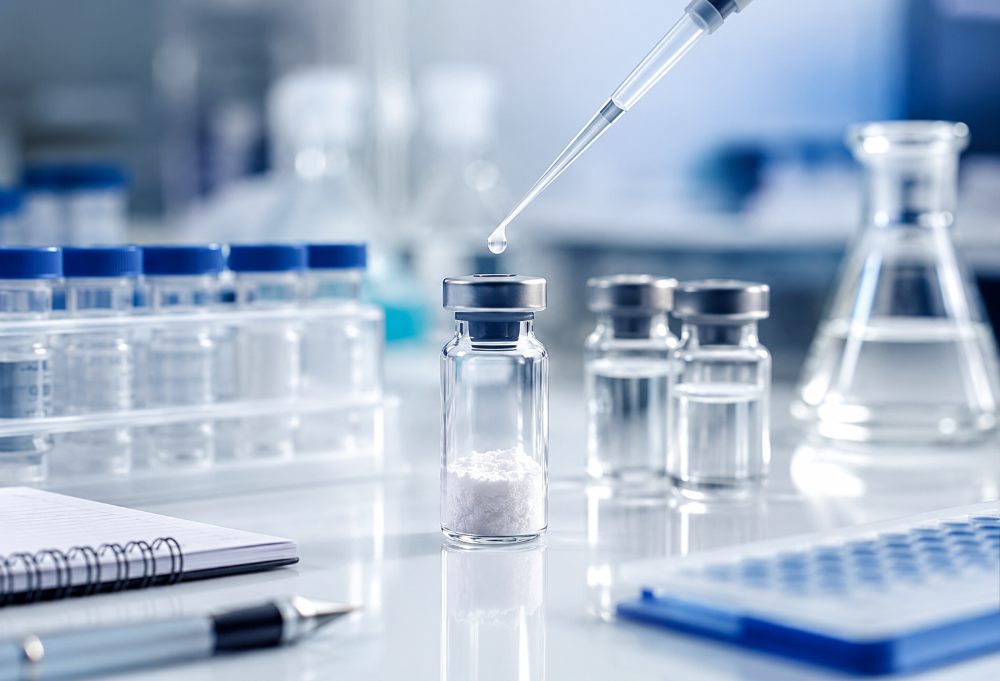
In research environments where experimental reproducibility matters, peptide handling protocols can significantly influence study outcomes. Whether working with cell culture assays, receptor binding studies, or pharmacological investigations, improper reconstitution or storage can compromise peptide stability and affect data quality. For laboratory managers, clinical researchers, and scientific investigators, understanding best practices for handling lyophilized peptides is an essential part of maintaining rigorous research standards.
Lyophilized peptides are designed to provide enhanced stability during shipping and storage, but their long-term integrity depends heavily on how they are reconstituted, aliquoted, and stored once they arrive at the laboratory.
Lyophilized peptide reconstitution is most effective when researchers use appropriate solvents, minimize freeze-thaw cycles, and follow validated storage procedures. Proper handling helps preserve peptide stability in laboratory research, reduces degradation risks, and supports more reliable experimental outcomes. When sourced from a reputable USA-based peptide supplier, high-purity research peptides can maintain their integrity throughout extended research programs when handled according to established laboratory protocols.
Best Practices for Handling High-Purity Research Peptides
- High-purity research peptides should be reconstituted using solvents appropriate for their specific sequence characteristics and intended research application.
- Peptide stability in laboratory research improves when researchers minimize repeated freeze-thaw cycles through aliquoting.
- Storage temperatures should be selected based on anticipated usage timelines and manufacturer recommendations.
- Batch-specific certificates of analysis (CoA) provide important verification of peptide identity and purity before experimental use.
- Third-party tested materials help support quality control initiatives in research laboratories.
Why Proper Peptide Handling Matters in Research
Proper peptide handling matters because peptides can be sensitive to environmental conditions such as moisture, temperature fluctuations, pH changes, and repeated handling. Even highly purified compounds can experience degradation when storage protocols are not carefully followed.
Research laboratories across biotechnology, pharmaceutical development, academic institutions, and life sciences organizations often rely on peptide-based studies that require consistent material quality throughout the duration of an experiment. Small variations in handling procedures may introduce unwanted variables that affect reproducibility.
Because peptides are frequently used in long-term studies, developing standardized laboratory procedures for reconstitution and storage helps reduce avoidable experimental variability.
At Elohim Peptides, we understand that researchers require consistent material quality and dependable documentation to support their work. Our commitment to third-party testing and batch-specific quality verification helps laboratories maintain confidence in the materials they use for scientific investigation.
Peptide handling protocols should be viewed as an extension of overall laboratory quality assurance programs. Establishing clear procedures before peptides arrive can help ensure researchers are prepared to store and use materials appropriately from day one.
Researchers can improve peptide integrity by selecting appropriate solvents, using aliquots for long-term storage, maintaining consistent temperatures, and documenting handling procedures. High-quality source materials and verified analytical documentation further support research consistency.
Supporting Scientific Control Through Documentation
Third-Party Testing and Quality Verification
Third-party testing provides independent verification of peptide purity and identity before materials enter laboratory workflows. Independent analytical review helps confirm that a peptide meets stated specifications and supports internal quality control processes.
Elohim Peptides maintains a purity standard of 99% or greater through comprehensive third-party testing protocols. This additional layer of verification helps researchers evaluate materials with greater confidence before beginning experimental work.
Batch-Specific Certificates of Analysis
Batch-specific certificates of analysis provide documented information regarding purity, identity, and analytical testing results. Researchers can use these records as part of their laboratory documentation systems and quality assurance procedures.
Maintaining access to batch-specific CoAs can be especially valuable for studies requiring traceability, reproducibility, and detailed experimental records.
Domestic Distribution Advantages
As a USA-based peptide supplier, Elohim Peptides supports nationwide laboratory distribution. Domestic fulfillment can help reduce transit times and simplify logistics for research organizations that require dependable access to peptide materials.
How to Reconstitute Lyophilized Peptides Correctly
Lyophilized peptide reconstitution begins with selecting the appropriate solvent and preparing the peptide under controlled laboratory conditions. Researchers should review sequence-specific recommendations and analytical documentation before initiating reconstitution.
Several factors influence solvent selection, including:
- Peptide sequence composition
- Hydrophobicity characteristics
- Intended research application
- Required working concentration
- Experimental protocol requirements
Researchers commonly begin with small solvent volumes and gradually adjust concentrations as needed for their specific applications. Gentle mixing is generally preferred to vigorous agitation, which may increase the risk of peptide instability in certain formulations.
Allowing materials to reach room temperature before opening containers may also help reduce moisture condensation and support more consistent reconstitution outcomes.
The Impact of Storage Conditions on Peptide Stability
Peptide stability in laboratory research depends heavily on environmental control. Temperature fluctuations, repeated handling, and exposure to moisture can contribute to degradation over time.
Common storage considerations include:
- Short-term storage requirements
- Long-term storage duration
- Frequency of access
- Freeze-thaw exposure
- Container selection
Researchers frequently divide reconstituted peptides into smaller aliquots before storage. This approach allows individual portions to be used as needed while minimizing disturbance to remaining material.
Proper labeling practices should include concentration information, preparation dates, batch identifiers, and storage conditions to support laboratory recordkeeping requirements.
Expert Commentary on Long-Term Peptide Preservation
Long-term peptide preservation is most successful when stability planning begins before reconstitution occurs. Researchers who establish storage protocols in advance are often better positioned to maintain consistency throughout extended studies.
One common misconception is that all peptides behave similarly during storage. In reality, peptide characteristics can vary substantially depending on amino acid composition, molecular structure, and intended application.
For this reason, researchers should avoid applying a single storage protocol universally across all peptide materials. Instead, sequence-specific recommendations and analytical documentation should guide handling decisions whenever possible.
Warning Signs of Peptide Degradation
Peptide degradation may present through several observable indicators that warrant further evaluation before continued experimental use.
Potential warning signs include:
- Unexpected changes in solution appearance
- Visible precipitation or aggregation
- Altered solubility behavior
- Inconsistent experimental outcomes
- Unexpected analytical results
- Changes in concentration measurements
- Evidence of contamination
When degradation is suspected, researchers should review storage records, handling procedures, and analytical documentation before proceeding with additional studies.
Ignoring these indicators may increase the risk of introducing unwanted variables into ongoing research projects.
When Additional Professional Guidance May Be Beneficial
Professional guidance may be beneficial when researchers encounter recurring stability challenges, unusual solubility behavior, or questions regarding storage recommendations for specialized compounds.
Researchers can typically manage routine storage and handling procedures internally when established protocols are followed. However, sequence-specific considerations occasionally require additional technical review to ensure optimal handling conditions.
Organizations conducting highly sensitive investigations may also benefit from reviewing quality documentation and analytical data before initiating critical experiments.
Common Factors Affecting Peptide Integrity
Peptide integrity is most commonly affected by environmental exposure, handling frequency, and storage management practices.
Several contributing factors include:
- Moisture exposure during handling
- Repeated freeze-thaw cycles
- Inappropriate solvent selection
- Temperature instability
- Extended storage beyond recommended periods
- Improper container sealing
- Contamination risks during preparation
Understanding these factors allows researchers to develop proactive strategies that support peptide stability throughout the research lifecycle.
Preventing Stability Problems Before They Occur
Preventing stability issues begins with establishing clear laboratory procedures and maintaining consistent handling practices.
Researchers can support long-term peptide integrity by:
- Reviewing CoA documentation before use
- Following sequence-specific recommendations
- Creating aliquots immediately after reconstitution
- Maintaining controlled storage temperatures
- Documenting handling events
- Training laboratory personnel on peptide protocols
These practices help reduce variability and contribute to more consistent experimental conditions.
Expected Outcomes from Proper Reconstitution and Storage
Proper reconstitution and storage procedures help preserve peptide quality, support reproducibility, and reduce avoidable experimental variability. Researchers who implement standardized handling protocols often benefit from more consistent material performance throughout study durations.
While storage practices cannot eliminate every source of variability, they can significantly reduce preventable degradation risks and improve confidence in experimental workflows.
Research Handling Insight
Laboratories that combine validated handling procedures with independently verified peptide quality often create stronger foundations for reproducible scientific investigation. Consistency in preparation, storage, and documentation remains one of the most effective strategies for supporting long-term research reliability.
Common Mistakes Researchers Should Avoid
Several avoidable mistakes can negatively impact peptide stability:
Mistake: Repeatedly thawing and refreezing a single stock solution.
Consequence: Increased degradation risk.
Better Approach: Use aliquots for individual experiments.
Mistake: Ignoring sequence-specific handling recommendations.
Consequence: Solubility or stability challenges.
Better Approach: Review documentation before preparation.
Mistake: Incomplete recordkeeping.
Consequence: Reduced traceability and reproducibility.
Better Approach: Maintain detailed storage and preparation logs.
A Common Research Scenario
A common laboratory scenario involves a research team preparing a large peptide stock solution for multiple experiments over several months. Without aliquoting, the stock undergoes numerous freeze-thaw cycles, eventually leading to inconsistent experimental observations.
By implementing aliquoting procedures during initial preparation, the laboratory can reduce handling exposure and preserve remaining material for future studies, helping maintain greater consistency across experimental timelines.
Research Support Solutions
Research support solutions begin with sourcing high-purity research peptides from suppliers that prioritize quality verification and documentation. Reliable analytical testing, transparent reporting, and dependable distribution processes help laboratories establish strong quality control foundations.
At Elohim Peptides, we provide:
- High-purity research peptides
- Third-party testing verification
- Purity standards of 99% or greater
- Batch-specific certificates of analysis
- Nationwide distribution from a USA-based supplier
Comparing Common Storage Approaches
Researchers evaluating storage strategies should consider both immediate usability and long-term stability.
Single Large Stock Solution
- Simpler preparation
- Greater freeze-thaw exposure
Aliquoted Storage
- Reduced handling risk
- Improved long-term consistency
- Better protection against repeated temperature changes
For many laboratory environments, aliquoting offers practical advantages for maintaining peptide integrity throughout ongoing research programs.
Nationwide Laboratory Support
As a domestic supplier serving laboratories throughout the United States, we support research organizations in biotechnology, academic, and life sciences sectors. Nationwide distribution helps laboratories obtain verified research materials efficiently while maintaining access to supporting quality documentation.
The Cost of Poor Peptide Handling
Poor peptide handling can result in degraded materials, compromised experiments, increased material waste, and additional resource expenditures. Researchers may face delays when studies require repetition due to preventable storage or handling issues.
Maintaining standardized protocols helps reduce these risks while supporting stronger experimental consistency.
FAQ
What is lyophilized peptide reconstitution?
Lyophilized peptide reconstitution is the process of dissolving a freeze-dried peptide using an appropriate solvent to prepare it for laboratory research applications. Solvent selection should be based on peptide characteristics and experimental requirements.
Why is aliquoting recommended after reconstitution?
Aliquoting helps minimize freeze-thaw cycles by allowing researchers to use only the amount needed for individual experiments. This practice can improve peptide stability and reduce degradation risks over time.
How do certificates of analysis support laboratory research?
Certificates of analysis provide documented information about peptide purity, identity, and testing results. Batch-specific CoAs support traceability, quality assurance, and reproducibility efforts.
Why is third-party testing important for research peptides?
Third-party testing provides independent verification of quality standards. This additional review helps researchers evaluate peptide materials with greater confidence before use in scientific investigations.
What factors most affect peptide stability in laboratory research?
Temperature fluctuations, moisture exposure, improper solvent selection, contamination, and repeated freeze-thaw cycles are among the most common factors affecting peptide stability.
What are BPC-157 research compounds used for?
BPC-157 research compounds are studied in scientific settings for investigational purposes. Researchers should use these compounds exclusively in accordance with applicable regulations and laboratory research protocols.
Why choose a USA-based peptide supplier?
A USA-based peptide supplier may offer advantages such as streamlined distribution, reduced transit times, and easier access to quality documentation and customer support resources.
What purity level should researchers look for?
Researchers often seek high-purity research peptides that meet stringent analytical standards. Purity requirements vary by application, but independently verified testing can help support quality assurance objectives.
For laboratories committed to maintaining high research standards, peptide handling procedures are just as important as peptide selection. Consistent reconstitution, storage, and documentation practices help preserve material integrity and support reliable experimental outcomes throughout the research process.
Advance Your Research with Verified Peptide Quality
When quality control, documentation, and consistency matter, partnering with a trusted supplier can support stronger laboratory workflows. Our commitment to third-party testing, 99%+ purity standards, batch-specific certificates of analysis, and nationwide distribution helps researchers access dependable materials for scientific investigation.