
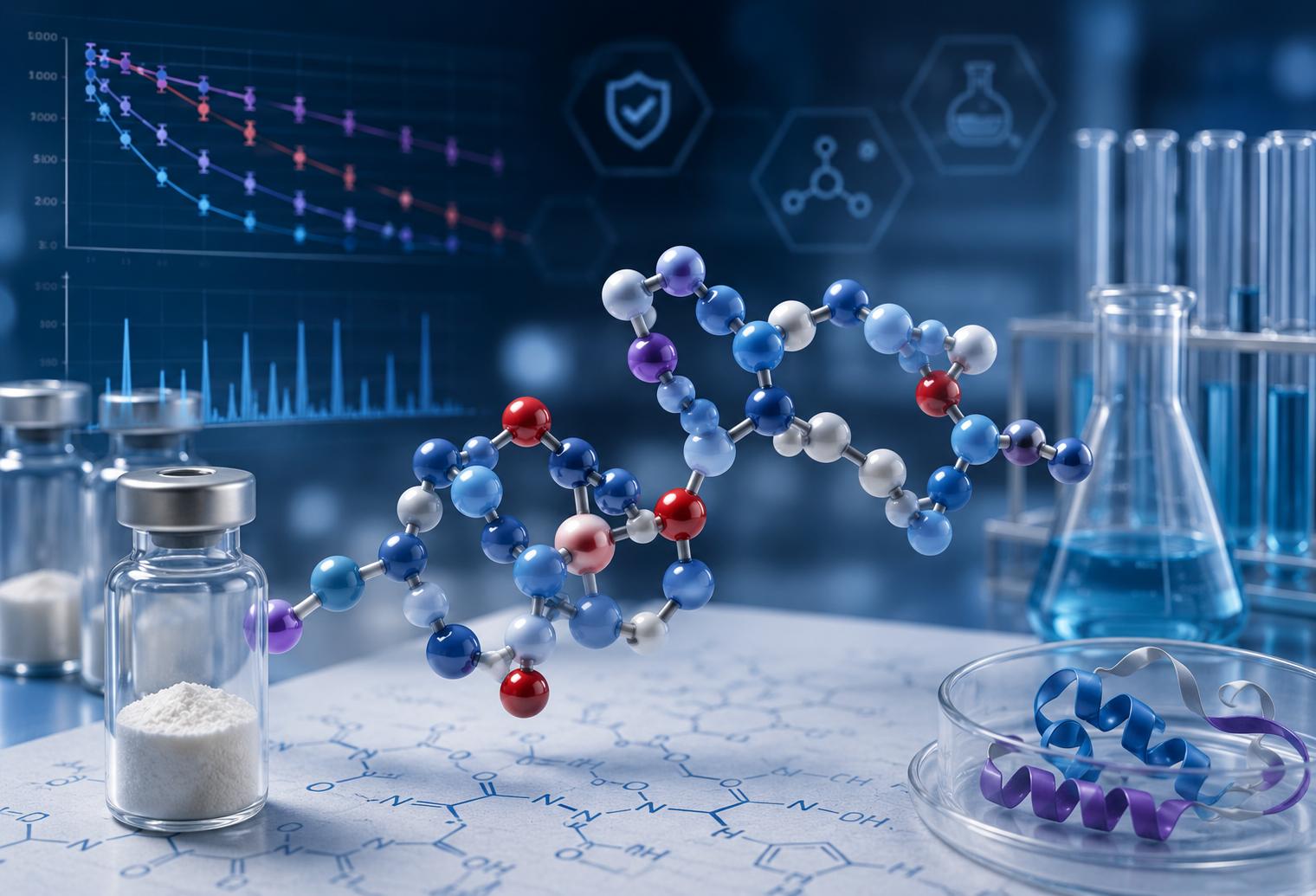
Research peptides continue to play an important role in laboratory studies, helping scientists explore cellular signaling, protein interactions, and other biological processes. As interest in peptide research grows, understanding how these compounds are synthesized, stored, and handled has become increasingly valuable for researchers seeking consistent experimental outcomes.
Quick Answer
Popular research peptides differ in their synthesis methods, stability profiles, and storage requirements. Factors such as amino acid sequence, purity, manufacturing processes, and proper handling all influence peptide quality. Researchers sourcing peptides should focus on products intended for research use, supported by transparent manufacturing practices and appropriate quality control.
What Researchers Should Know
-
Peptide stability depends on both chemical structure and proper storage conditions.
-
High purity synthesis methods help improve consistency across research applications.
-
Freeze dried peptides generally offer greater long-term stability than peptides already in solution.
-
Laboratories throughout Minnesota, including those serving researchers near Underwood and Otter Tail County, benefit from maintaining reliable cold storage procedures.
-
Environmental conditions such as humidity and temperature fluctuations can reduce peptide stability if products are not stored correctly.
Why Stability Matters in Research
Peptide stability directly affects experimental reliability. Even small amounts of degradation may influence laboratory results, making proper synthesis and storage important considerations before beginning any research project.
For researchers throughout west central Minnesota, seasonal temperature changes can also make shipping and storage procedures especially important. Careful handling during transport and immediate placement into recommended storage conditions help preserve peptide integrity.
Elohim Peptides provides research peptides intended for laboratory research use. We believe researchers benefit from understanding not only peptide selection but also the science behind synthesis and long-term stability.
Understanding Research Peptide Synthesis
Research peptides are commonly produced using solid-phase peptide synthesis (SPPS), which has become the industry standard for creating complex amino acid sequences with high precision.
During synthesis, amino acids are added sequentially while attached to a solid resin. This controlled process allows chemists to assemble peptides efficiently while minimizing unwanted side reactions.
After synthesis is complete, purification techniques such as high-performance liquid chromatography (HPLC) are frequently used to separate the desired peptide from impurities and byproducts. Final identity confirmation may include analytical methods like mass spectrometry.
These manufacturing steps help researchers obtain peptides with consistent composition suitable for laboratory investigations.
Popular Research Peptides
Several peptides are frequently discussed within research settings because of their unique biological properties.
BPC-157
BPC-157 is commonly studied for its potential interactions with tissue repair pathways and cellular signaling mechanisms.
TB-500
TB-500 has been investigated for its relationship to actin regulation and cellular movement during laboratory research.
CJC-1295
Researchers often examine CJC-1295 while studying growth hormone signaling pathways and endocrine mechanisms.
Ipamorelin
Ipamorelin is frequently included in laboratory investigations involving growth hormone secretagogue receptors.
Kisspeptin
Kisspeptin research focuses on reproductive hormone signaling and neuroendocrine regulation.
Each peptide presents unique handling requirements, highlighting the importance of reviewing storage recommendations before beginning any research protocol.
Factors That Affect Peptide Stability
Peptide stability depends on several environmental and chemical factors.
Temperature
Temperature is one of the most significant influences on peptide preservation. Most lyophilized peptides remain more stable under refrigerated or frozen storage according to manufacturer recommendations.
Moisture
Exposure to moisture may accelerate degradation. Keeping peptides in sealed containers until use helps reduce unwanted exposure.
Light
Some peptides demonstrate increased sensitivity to ultraviolet light. Opaque packaging or dark storage environments may help minimize degradation.
Repeated Freeze-Thaw Cycles
Repeated freezing and thawing can negatively affect peptide quality after reconstitution. Many laboratories divide solutions into smaller aliquots to reduce unnecessary freeze-thaw exposure.
Warning Signs of Peptide Degradation
Researchers should monitor products for signs that may indicate degradation.
-
Unexpected discoloration
-
Visible moisture inside storage containers
-
Difficulty dissolving the peptide
-
Cloudiness after reconstitution
-
Storage outside recommended temperature ranges
-
Packaging damage during shipping
If any of these conditions are observed, additional evaluation may be appropriate before laboratory use.
Best Practices for Peptide Storage
Proper storage helps maintain peptide integrity throughout its intended research lifecycle.
Recommended practices include:
-
Store lyophilized peptides according to manufacturer recommendations.
-
Protect products from excessive humidity.
-
Limit unnecessary exposure to room temperature.
-
Label aliquots clearly after reconstitution.
-
Avoid repeated freeze-thaw cycles whenever possible.
-
Follow laboratory documentation procedures for inventory management.
These simple practices can contribute to more consistent laboratory workflows.
Common Synthesis Trends
Peptide manufacturing continues to evolve as researchers seek improved purity, efficiency, and scalability.
Current trends include:
-
Improved automated synthesis platforms
-
Enhanced purification technologies
-
Better analytical verification methods
-
Increased emphasis on batch consistency
-
Expanded availability of custom peptide synthesis
These developments support laboratories requiring dependable research materials across a wide range of scientific disciplines.
Common Mistakes Researchers Can Avoid
Several handling practices may unintentionally reduce peptide quality.
| Mistake | Potential Consequence | Better Approach |
|---|---|---|
| Leaving peptides at room temperature too long | Increased degradation risk | Return products to recommended storage promptly |
| Repeated freeze-thaw cycles | Reduced stability | Prepare small aliquots |
| Ignoring storage guidance | Lower experimental consistency | Follow manufacturer recommendations |
| Using contaminated tools | Sample contamination | Maintain sterile laboratory technique |
| Poor labeling | Inventory confusion | Label preparation dates and concentrations clearly |
Common Laboratory Scenario
A research laboratory receives multiple peptide shipments during warmer summer weather. Rather than leaving deliveries on a receiving dock, laboratory personnel immediately inspect packaging and transfer materials into appropriate refrigerated or frozen storage according to manufacturer guidance. This workflow helps preserve product quality before experiments begin.
Comparing Research Peptide Options
Researchers often compare peptides based on intended laboratory applications, stability, and handling characteristics rather than popularity alone.
Important considerations include:
-
Intended research objectives
-
Required purity level
-
Storage requirements
-
Available analytical documentation
-
Manufacturing consistency
Selecting peptides that align with experimental design can improve research planning and reproducibility.
Cost of Improper Storage
Improper storage can result in wasted laboratory resources, delayed experiments, and the need to replace degraded materials. Following recommended handling procedures helps protect research investments while supporting reliable laboratory outcomes.
Frequently Asked Questions
How should research peptides be stored?
Most lyophilized research peptides remain more stable when stored according to manufacturer recommendations, typically under refrigerated or frozen conditions while protected from moisture and light.
Why are lyophilized peptides commonly preferred?
Lyophilized peptides generally provide improved long-term stability because water has been removed during the freeze-drying process, reducing opportunities for degradation.
What affects peptide purity?
Purity depends on synthesis quality, purification methods, analytical testing, and manufacturing controls used throughout production.
Why is HPLC important?
High-performance liquid chromatography helps separate the desired peptide from impurities, improving overall product quality for research applications.
Can temperature changes affect peptide stability during shipping to Minnesota?
Yes. Seasonal temperature fluctuations throughout Minnesota can influence shipping conditions, making prompt inspection and proper storage important upon delivery.
Why should freeze-thaw cycles be minimized?
Repeated freeze-thaw cycles may increase degradation after reconstitution. Many laboratories prepare smaller aliquots to reduce unnecessary handling.
Closing
Understanding peptide synthesis methods and stability considerations helps researchers make informed decisions throughout the research process. From manufacturing quality to proper storage, each step contributes to maintaining peptide integrity and supporting consistent laboratory outcomes.
Explore Quality Research Peptides
Whether you are expanding an existing research program or sourcing peptides for new laboratory investigations, we are committed to providing dependable research products supported by transparent manufacturing practices.